Thanksgiving and Chuseok: What’s on the Fall Table in America and Korea?
When fall arrives, tables around the world begin to change with the season.
It’s the time of year when crops are harvested, seasonal ingredients fill the kitchen, and families gather to share food. In the United States, there’s Thanksgiving. In Korea, there’s Chuseok.
Thanksgiving and Chuseok come from different histories and traditions. But take a closer look at the two holiday tables, and you’ll find something they share: gratitude for the harvest and the joy of sharing good food with family.
What’s on an American Thanksgiving Table?

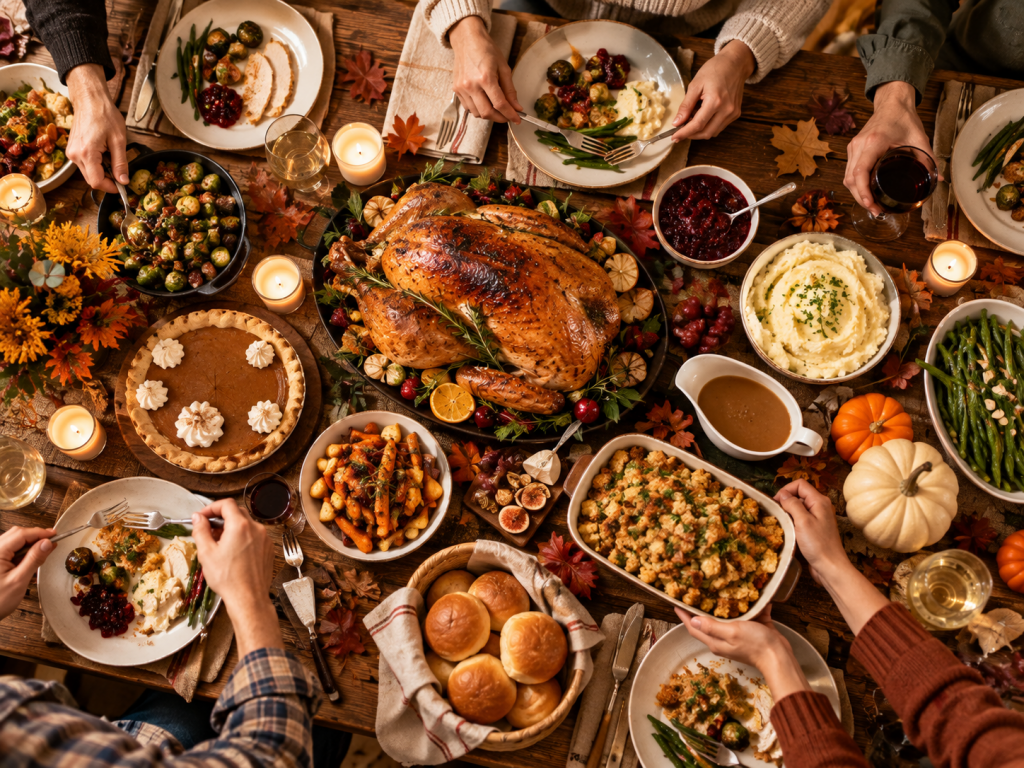
When most people think of Thanksgiving food, roast turkey is probably the first thing that comes to mind.
But look around the turkey and you’ll find plenty of fall ingredients, too. Potatoes, sweet potatoes, squash, corn, and cranberries are all familiar sights on the Thanksgiving table.
Root vegetables such as potatoes and sweet potatoes are especially popular. They can be mashed, roasted, baked, or cooked alongside other seasonal vegetables.
They may look like simple side dishes next to the centerpiece turkey, but Thanksgiving dinner just wouldn’t feel quite the same without them!
Fall in Korea Means Chuseok
Fall is also a special season in Korea.
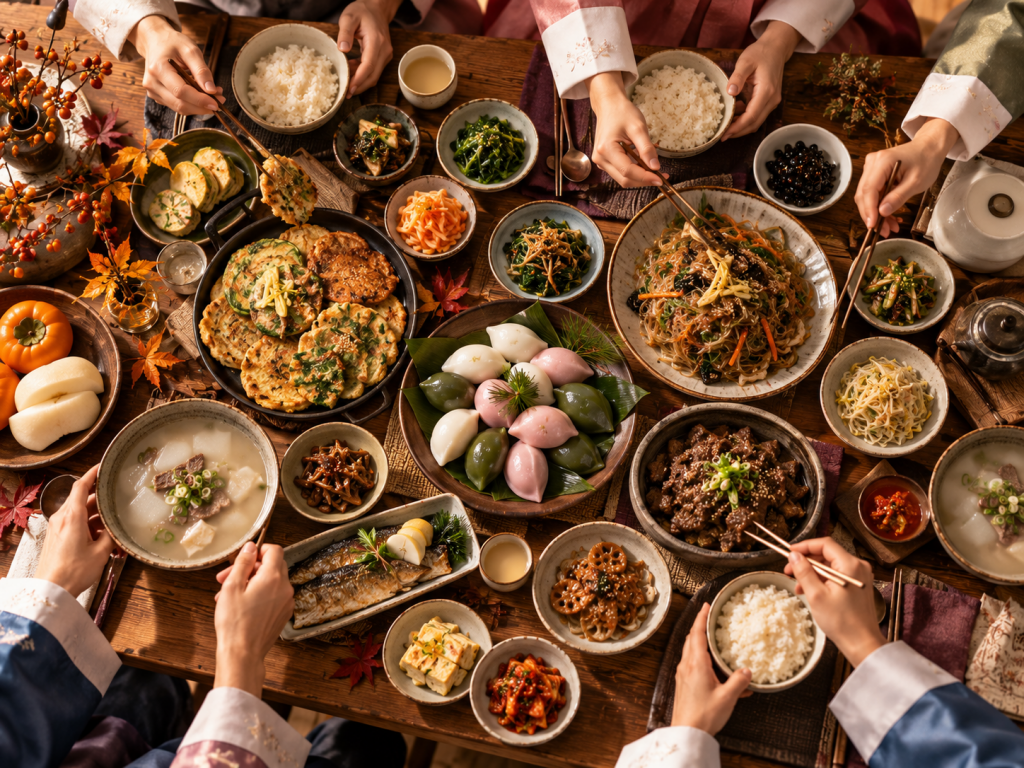
Chuseok, celebrated on the 15th day of the eighth month of the lunar calendar, is one of Korea’s most important traditional holidays. Families gather and share foods made with freshly harvested grains and seasonal ingredients.
Songpyeon, the small half-moon-shaped rice cakes closely associated with Chuseok, are made with rice flour and filled with ingredients such as sesame seeds, beans, or chestnuts.
The Chuseok table can also include jeon, seasoned vegetable dishes, japchae, fruit, and many other foods meant to be shared with family.
Thanksgiving and Chuseok are not the same holiday.
Still, there’s something familiar in the way both traditions bring seasonal food to the table and turn a meal into an occasion for gathering, sharing, and giving thanks.
Why Do Root Vegetables Belong on the Fall Table?
Look at fall foods in the U.S. and Korea, and another interesting connection begins to appear.
Many ingredients come straight from the ground.
Potatoes and sweet potatoes are familiar parts of American fall cooking. In Korea, one of the season’s most versatile ingredients is Korean radish.
As the weather gets cooler, Korean radish develops a crisp texture and a pleasantly mild sweetness. That’s why it has long been used in much more than kimchi.
It can be added to soups and stews, braised until tender, or sliced and lightly seasoned as a vegetable side dish. A large radish can even find its way into several different meals.
That kind of versatility has always been a natural part of Korean home cooking.
Gratitude Eventually Finds Its Way to the Table
Thanksgiving food and Chuseok food may look very different.
One table might have turkey, potatoes, sweet potatoes, and squash. Another might be filled with songpyeon, jeon, japchae, seasoned vegetables, and seasonal Korean produce.
But the stories behind those tables aren’t as far apart as they first appear.
Enjoy what the season has given us. Share it with the people around us. And take a moment to appreciate the abundance of the year.
Perhaps that’s why fall food can feel like something more than just another meal.
Korean radish has long been part of that seasonal story in Korea.
Just as potatoes and sweet potatoes feel at home on an American Thanksgiving table, crisp and naturally sweet Korean radish has its own place in Korea’s fall food culture.
Two countries. Two very different fall tables.
And on both, we can find stories about harvest, good food, family, and gratitude.


